
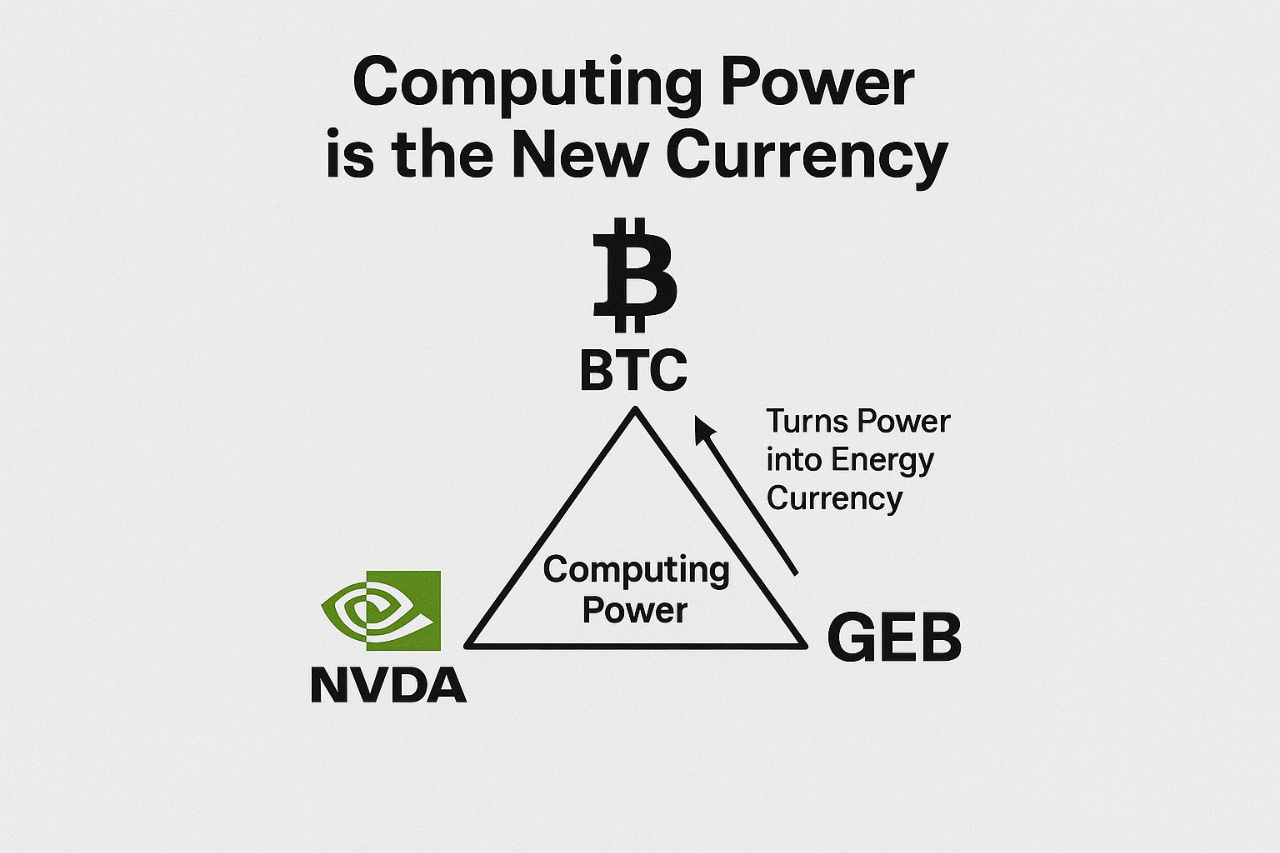
$BTC is “energy money” generated by peer-to-peer cryptography. Its substance is neither code nor credit, but the energy consumption of computation itself. Tencent Q-coin is virtual currency created by internet technology. It relies on a centralized platform and is essentially “platform points.”
POS/BFT cryptocurrencies are “credit-code money.” Their security comes from rules and governance, not from physical energy. (Essence: trusting code, not trusting the physical world.)
It is not simple cryptography, but: Turing’s ordinal logic system ⟂ Nash’s non-cooperative game — together forming a centerless, sustainably self-driven computational structure.
This is Bitcoin’s underlying framework: A decentralized time-service system whose material is computation power.
Because they share the same essence: “Energy → standardized into computation → computation can be freely priced”
Computation power is becoming the most fundamental economic unit of the 21st century.
Turning computation power into something liquid and monetizable, enabling AI and energy money to circulate peer-to-peer.
In other words:
This is the path that unifies Bitcoin computation and AI computation. This is the main storyline of next-generation crypto-economics.
